


Unique Observership Experience designed for health professionals worldwide.

Immersive India Exposure: 3 weeks in India, including 10 days field immersion.

Expert Mentorship from a seasoned mentor for guidance and support.

Lifelong Network with like-minded professionals & friendships that last a lifetime!

Cultural immersion, including visits to heritage sites and Indian culinary experience.

Buddy to help with logistics and cultural insights.

Prof. D Prabhakaran
President-Elect, World Heart Federation,
Executive Director
Centre for Chronic Disease Control, New Delhi

Prof. Denis Xavier
Professor and Head, Pharmacology
Division of Clinical Research & Training
St. John’s Medical College and Research Institute, Bengaluru

Prof. Atiya Faruqui
Professor of Pharmacology,
Faculty at Division of Clinical Research & training
St. John’s Medical Hospital and Research Institute, Bengaluru

Dr Arun P Jose
Deputy Director & Head
BRIDGE Centre for Digital Health,
Centre for Chronic Disease Control, New Delhi

 Dr. Jeemon is a trained epidemiologist. He developed a focus on cardiovascular disease epidemiology over the last decade. His research interests are in the development and evaluation of quality improvement initiatives and complex public health interventions for the prevention and control of chronic diseases in India. His current focus is on the epidemiology of heart failure in India, the management of multi-morbidity in primary care settings, and the development of innovative solutions for the management of cardiovascular conditions in low- and middle-income country settings. He is also the winner of the Shanti Swarup Bhatnagar Prize in medical sciences (2021).
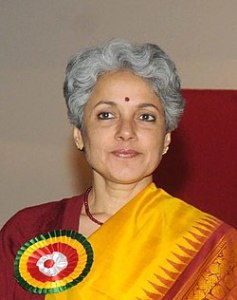
Soumya Swaminathan, a pediatrician and global expert in tuberculosis and HIV research, recently served as WHO’s Chief Scientist and previously as Director General of the Indian Council of Medical Research (ICMR), Ministry of Health and Family Welfare, Government of India (2015-2017). She assumed the role of Chairperson at the M S Swaminathan Research Foundation (MSSRF) in February 2023. She is also the Principal Advisor to National Tuberculosis Elimination Programme (NTEP), Ministry of Health and Family Welfare, Government of India.
With over 40 years of experience in clinical care and research, Dr Swaminathan has dedicated her career to translating research into impactful health programs. As Secretary to the Government of India for Health Research, her efforts were focused on integrating science into health policy-making, enhancing research capabilities in Indian medical institutions, and fostering global partnerships in health sciences.
Dr Swaminathan received her academic training in India, the UK, and the USA, and has authored over 480 peer-reviewed publications and book chapters. She holds honorary doctorates from prestigious institutions including Karolinska Institute, EPFL Lausanne, and the McGill University, Canada. Her current focus is on addressing the health impacts of climate change, especially on women and children and food system transformations to strengthen nutrition security in India and regionally.
 Professor Vivekanand Jha is Executive Director at The George Institute for Global Health, India, Chair of Global Kidney Health at the Faculty of Medicine, Imperial College London, and past President of the International Society of Nephrology. He established India’s first basic science research laboratory in Nephrology and has worked extensively with the WHO to develop clinical practice guidelines and advocacy papers.
His research focuses on understanding the health and societal impact of kidney diseases globally, and the development of affordable, scalable, and sustainable prevention tools. Professor Jha has lectured extensively around the world and is a prolific writer and editor.
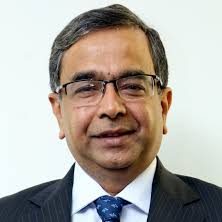 Prof. Reddy, a cardiologist and epidemiologist, is the founder and first executive Director of the Centre for Chronic Disease Control. He is also former President of the Public Health Foundation of India (2006–22) and Honorary Distinguished Professor, Chancellor of PHFI University of Public Health Sciences, also the Centre for Universal Health Assurance, Indian School of Public Policy, PHFI Institute of Public Health Sciences. He was the Head of Cardiology at AIIMS and the first Bernard Lown Visiting Professor of Global Cardiovascular Health at Harvard (2009–13). He is currently Adjunct Professor at Harvard, Emory, Sydney, and Pennsylvania universities, and advises institutions such as McGill University and the University of Michigan. Internationally, he has served as President of the World Heart Federation (2013–14), co-chair of the UN SDSN Health Group, and member of several WHO expert panels. Nationally, he chaired the High-Level Expert Group on Universal Health Coverage (Planning Commission, 2010–11), advised several state governments, and led the NHRC Core Advisory Committee on Health.
Prof. Reddy has over 590 publications, the former editor of the National Medical Journal of India for 10 years, and authored Make Health in India and Pulse to Planet. His numerous honours include the WHO Director General’s Award, the Luther Terry Medal, the Queen Elizabeth Medal for Health Promotion, the Padma Bhushan, and multiple honorary doctorates.
 Mr. Rajeev Sadanandan, a member of the Indian Administrative Service, is a health policy and systems expert based in Kerala, India. He was the health secretary of Kerala for 11 years during which he played transformative role to reform health systems in Kerala. Mr. Sadanandan set up Kerala’s AIDS control programme, the Revised National Tuberculosis Control Programme as well as the Programme for the control of Non Communicable diseases. He commenced the digitalisation of Kerala’s health system through the E-Health programme. He designed and executed the ‘Aardram Mission’ widely credited to have considerably improved government health systems. He led on the control of the Nipah outbreak and was the Advisor to the Chief Minister of Kerala on Management of COVID.
Mr. Sadanandan was the founder CEO of Health System Transformation Platform, a think tank on health policy and systems in New Delhi. He had worked as CEO of India’s national social health insurance programme, in addition to holding many other positions in state and federal governments and a brief stint in UNAIDS. He was a Commissioner on the Lancet Global Health Commission on Financing Primary Health Care. Mr. Sadanandan is currently a member of the Technical Advisory Panel of the Pandemic Fund set up by the World Bank and the Policy Makers Forum under the Alliance for Health Policy and Systems Research of the World Health Organisation, Geneva. Mr. Sadanandan is a member of the technical committees of many international and national research projects.
 Prof. Krishna Kumar is a distinguished pediatric cardiologist with extensive training at leading institutions, including the All-India Institute of Medical Sciences, New Delhi and Boston Children’s Hospital, USA. He has earned international recognition for his expertise and has been instrumental since 1998 in establishing and leading the pediatric heart program at Amrita Hospital, Kochi, elevating it to global standards through excellence in clinical care, research, and training.
His clinical expertise spans echocardiography, catheter-based interventions, and intensive care. With over 250 scientific publications and a lifelong commitment to advancing pediatric cardiac care, Dr. Krishna Kumar continues to shape the future of pediatric cardiology and improve outcomes for children worldwide.